Driving a sustainable future with rare-earth-free motors


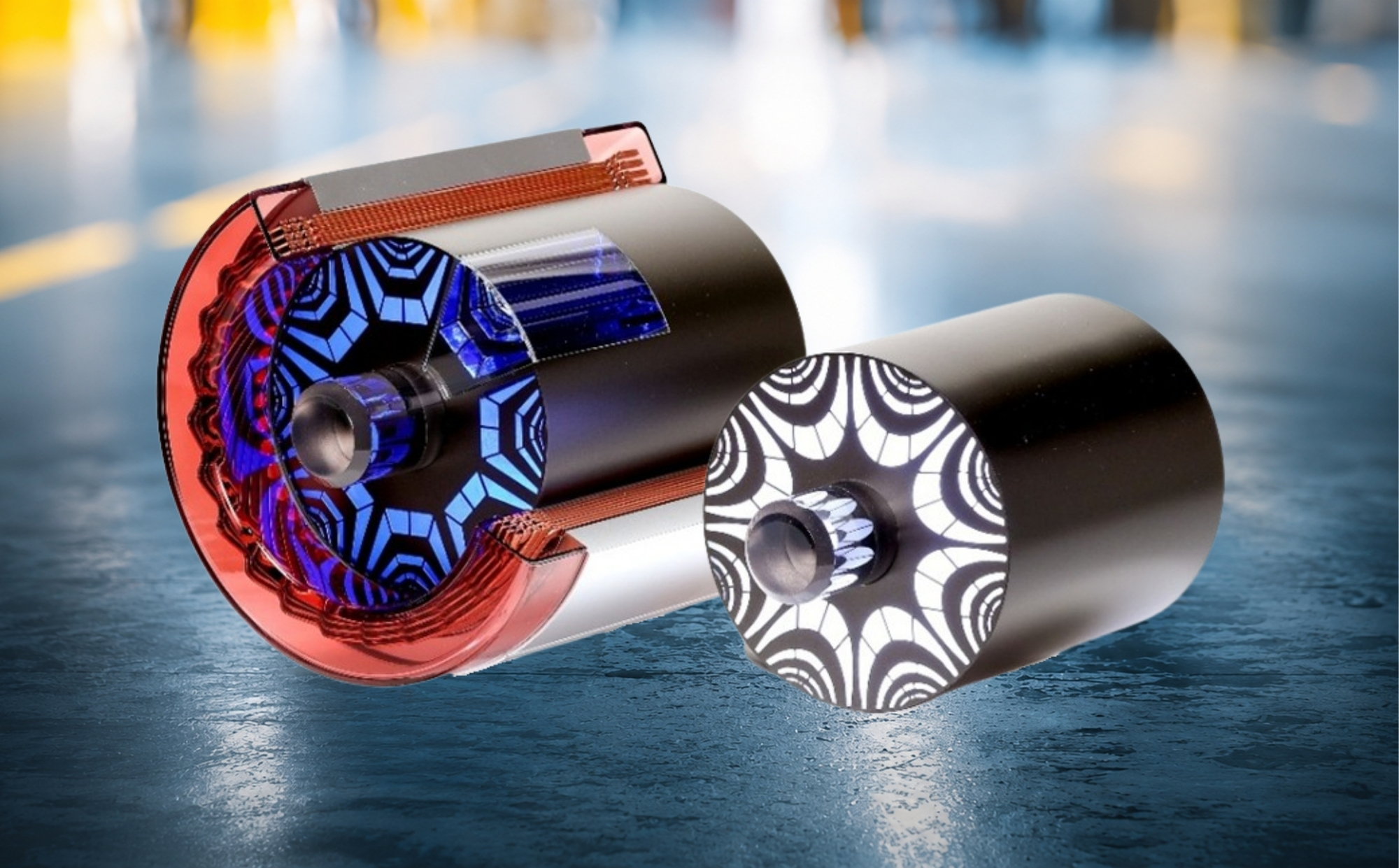
Rare earth minerals are used[AS1.1] in the majority of electric vehicle (EV) motors today—but introduce challenges with cost volatility, uneven supply distribution and environmental impact from mining.
As electrification accelerates amidst a rapidly changing world, it’s no longer a matter of just performance or efficiency, but also resilience.
Growing dependency on rare earth materials
EV motors can mainly be divided into three categories: permanent magnet synchronous motors (PMSMs), induction motors and wound field synchronous motors.
PMSMs, which use rare earth magnets, dominate the market—accounting for over 80 percent of EV motors in 2024, according to Benchmark Mineral Intelligence. Demand for rare earths increased by 34 percent in the same year.[
This growing demand brings structural supply risk. From 2024 to 2040, over 90 percent of rare earth elements used in EVs are expected to come from a select number of [AS4.1]refining countries—creating a strong dependency in motor manufacturing.
This is no longer a theoretical concern—it is already being raised by customers, who are asking what would happen if rare earth materials became unavailable.
Beyond supply: The sustainability challenge
Rare earth extraction also comes with environmental impact.
Mining and processing can generate wastewater, atmospheric pollution and radiation. While regulation can mitigate the impact to some extent, rare-earth-free alternatives offer a more sustainable path.
A different approach: Reducing rare earth dependency
Astemo is developing rare-earth-free motors as part of its long-term vision for a sustainable society.
The system uses two types of synchronous reluctance motors:
A main drive motor (rear), using ferrite magnets
An auxiliary motor (front), using no magnets at all
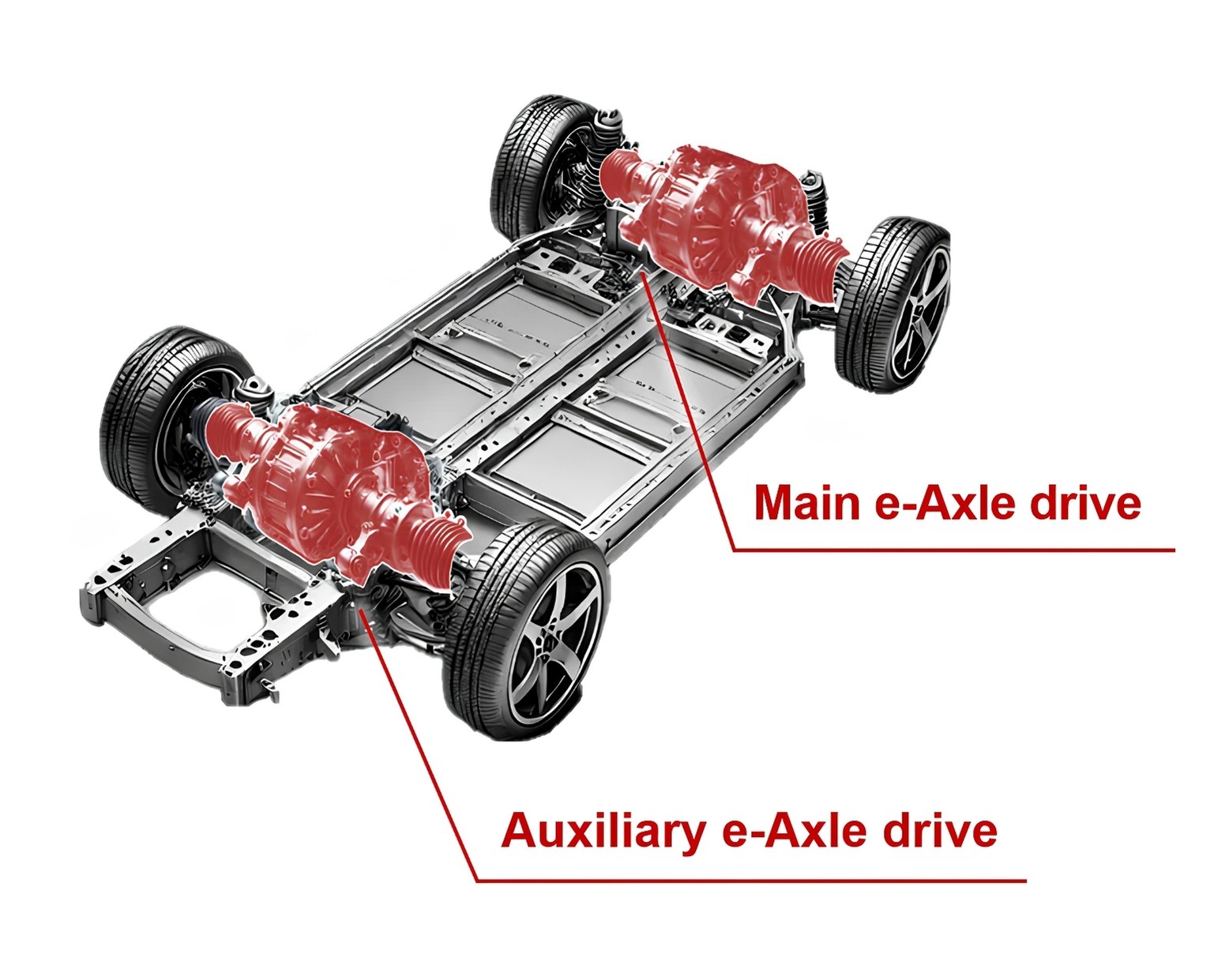
Dual e-Axle setup with main (rear) and auxiliary (front) drive
Delivering performance without rare earths
These motors generate rotational force through differences in magnetic resistance.
A multi-layer flux structure enables precise control of magnetic fields—delivering performance comparable to neodymium-based systems
Main drive: up to 180 kW
Auxiliary drive: up to 135 kW, operating only when needed
This setup improves overall system efficiency by reducing unnecessary energy consumption.
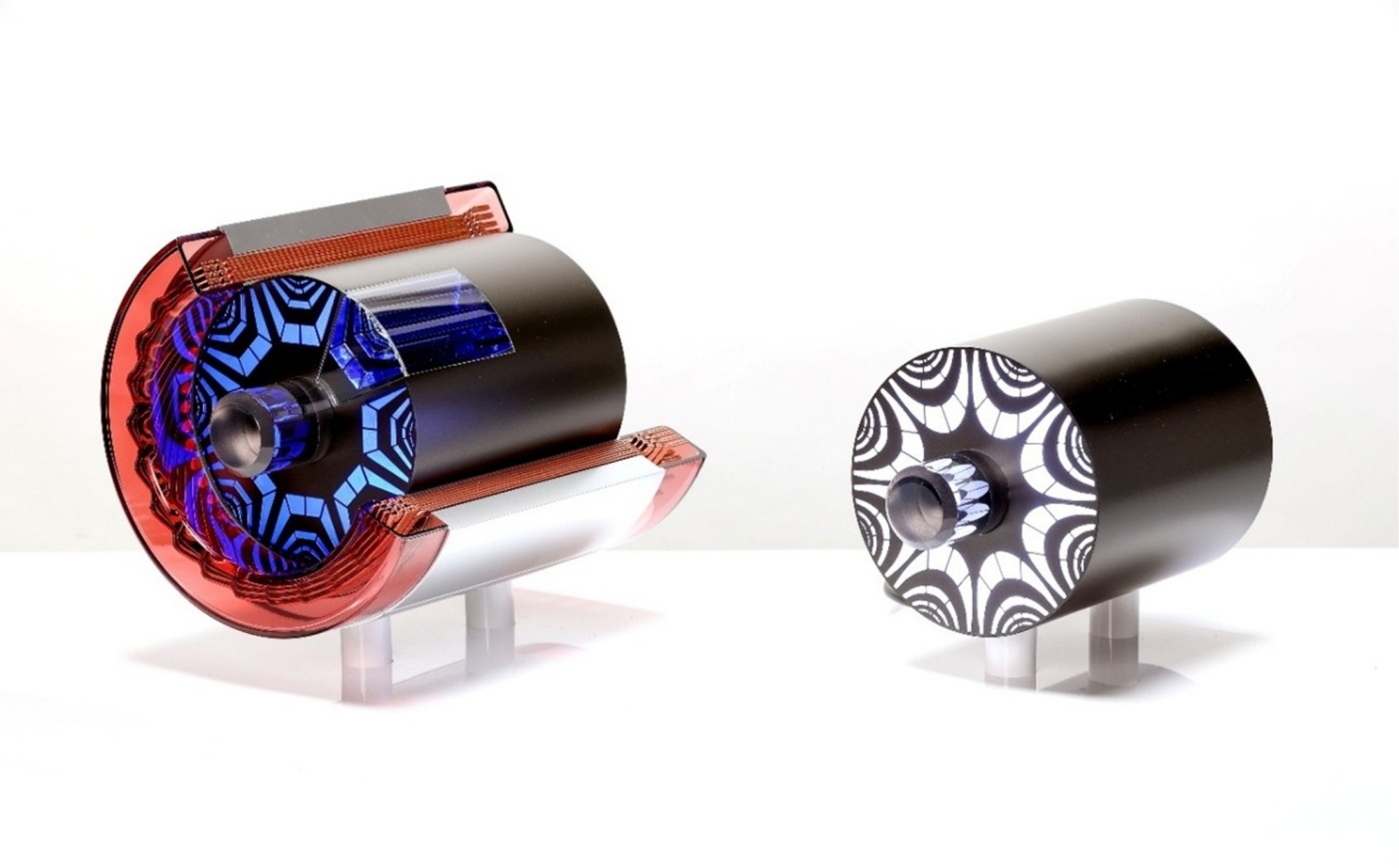
Left: Main drive consisting of stator (red) and iron core with permanent ferrite magnets (blue); right: auxiliary drive motor with voids instead of magnets
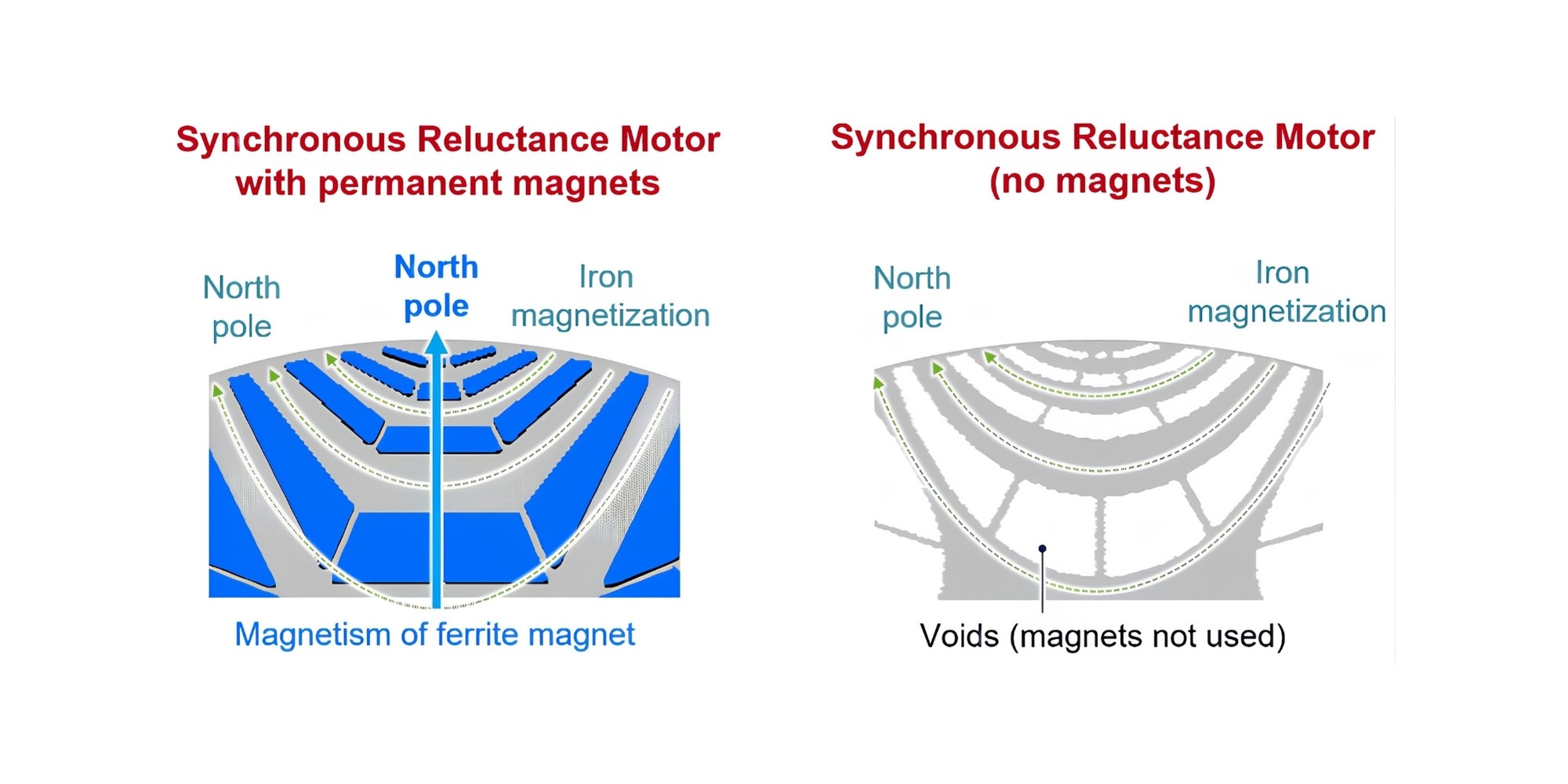
Depiction of how magnetism is generated, with the outer edge of the diagram representing the rotor
Rethinking performance trade-offs
Main drive systems require large output, which makes magnetic assistance necessary. However, in auxiliary systems, permanent magnets generate magnetic force even when not needed, which can lead to energy loss.
Magnet-less motors therefore offer a clear advantage in auxiliary roles.
Ferrite-based motors still come with trade-offs—they are around 30 percent larger and heavier than neodymium systems. However, given the significantly lower magnetic force of ferrite, this represents a substantial improvement over what would otherwise be required.
In this context, the comparison has been made that these motors cannot compete directly with rare-earth-based systems, but rather serve a different purpose—similar to the distinction between premium and regular gasoline.
They also offer cost advantages, as ferrite materials are more abundant and less resource-intensive to mine.
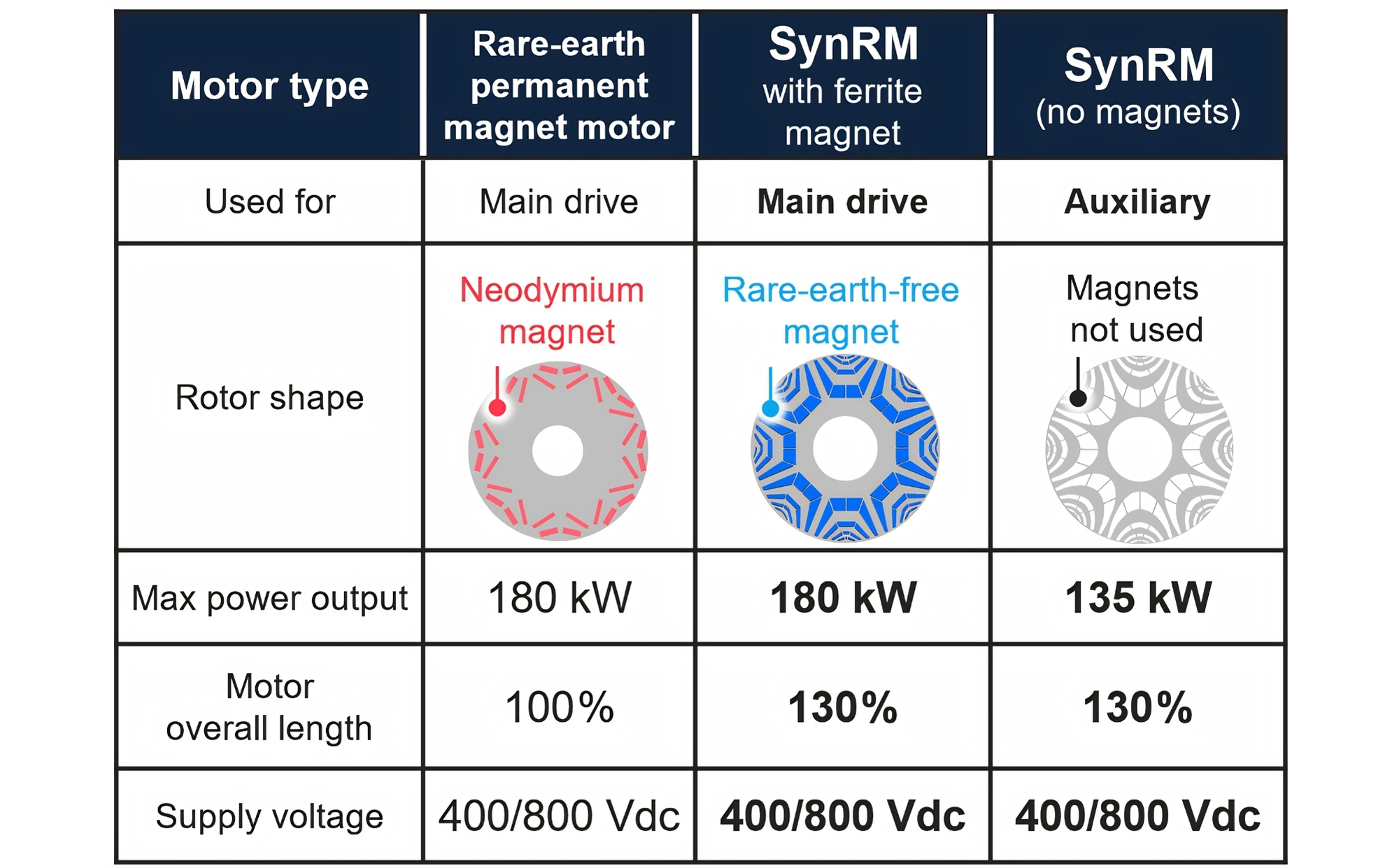
Comparison between traditional rare-earth motors and synchronous reluctance motors (SynRM)
Solving the cooling challenge
One of the key technical challenges is heat.
Forming magnetic poles in the rotor core requires higher current flow, which increases coil temperature. To address this, Astemo developed an oil-immersed coil design that efficiently removes heat at its source.
This fully immersed coil enables efficient cooling and represents a key feature of the design.
Existing[AS7.1] rare-earth-free motors—such as induction and wound-field motors—generate heat in the rotor due to current flow.
Astemo’s design avoids this by concentrating electromagnetic force in the stator, preventing rotor heat generation and reducing energy losses. Ferrite magnets are also designed to suppress eddy currents, further improving thermal efficiency.
From a cooling efficiency standpoint, this design was shown to outperform[AS8.1] induction motors and wound-field motors.
A multi-pronged path forward
Neodymium motors will continue to play an important role and remain part of Astemo’s portfolio.
At the same time, rare-earth-free motors introduce an additional pathway that strengthens resilience and sustainability across electrification strategies.
This fully immersed coil enables efficient cooling and represents a key feature of the design.
This approach also builds on long-standing engineering expertise in thermal management and heat dissipation—knowledge that remains highly relevant in the transition from internal combustion to electric systems.
Looking ahead
Slated for commercialization in 2030, rare-earth-free motors are not a replacement, but a strategic complement.
By expanding the range of viable motor technologies, the industry can reduce dependency risks, improve cost stability and move toward a more sustainable future for electrification.[