Materiality Identification Process
Identifying material issues starting from recognizing megatrend risks and opportunities
We established an issue universe starting from recognizing megatrend risks and opportunities. Based on assessments of importance from internal and external perspectives and workshop discussions, we narrowed down the material issue candidates. Following deliberation and approval by the Board of Directors, we identified nine material issues for sustainable growth.
Identification Process
Step 1: Extraction of issues to be addressed
Based on recognition of megatrend (external environment) risks and opportunities, competitor trends, and international guidelines, we extracted 22 issues (establishing an issue universe).
Step 2: Assessment of importance
We assessed the importance of each of the 22 issues using a five-point scale from both internal and external perspectives.
Importance assessment methodology
![Setting the issue universe from both internal perspectives (alignment with our MISSION, VISION, and VALUES [MVV], medium- and long-term management and business strategies) and external perspectives (dialogue with stakeholders, international frameworks and standards)](/en/assets/images/sustainability/materiality/process/ph-01.png)
Step 3: Workshop discussions
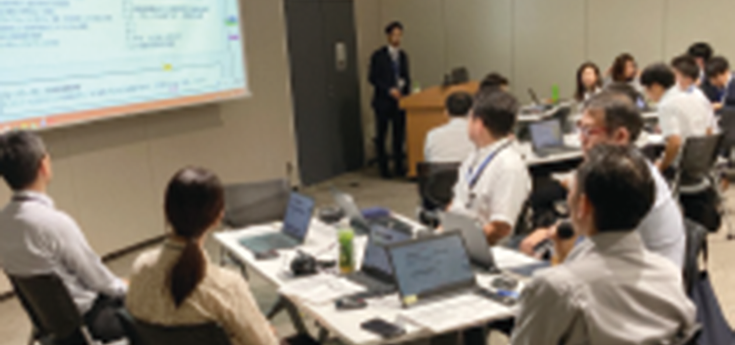
We held internal workshops globally to discuss employees’ perspectives on material issues.
Step 4: Deliberation and approval by the Board of Directors
Material issue candidate proposals extracted and refined through the workshops were discussed by the Sustainability Committee, the Executive Committee, and the Board of Directors. Opinions from outside directors were also heard, and the material issues were approved by the Board of Directors.
Review material issues in light of environmental changes
Opinions from external stakeholders (excerpts)
Sustainable Management Promotion Organization
When selecting material issues, it is essential to accurately capture trends in environmental constraints and prioritize feasible measures, while maintaining a stance that avoids excessive adaptation that could undermine business activities. From that perspective, contributing to a recycling-oriented society requires a broad spectrum of measures, technologies, and supplier engagement—from product design to institutional framework design. We regard this as a domain uniquely suited to your company’s strengths. Business activities that prioritize this material issue are likely to gain social consensus and trust.
Institute of Fluid Science, Tohoku University
Technological developments that were pursued in the past without sufficient consideration of their environmental impact have contributed to current climate change and global warming. This is why there is a strong demand for environmentally friendly technological development. Contributing to a decarbonized society is a key sustainability issue for global companies, and as a company that manufactures and sells mobility-related parts globally, we expect your company to further contribute by incorporating diverse perspectives and leveraging your international network and advanced technological capabilities to take a comprehensive approach to the entire value chain.
Takanezawa Town, Tochigi Prefecture
One of the challenges facing our town is the high level of greenhouse gas emissions from transportation (automobiles). Based on this, we believe that contributing to a decarbonized society throughout the product life cycle is your company's most important sustainability issue, and our town has high expectations for your efforts to reduce greenhouse gas emissions through advanced mobility technologies.