Responsibility to society

Initiatives for respecting human rights and contributing to local communities and realizing a sustainable supply chain
Material issues relating to society Respect human rights and contribute to local communities
Vision for 2030
- Respect human rights, and establish a system that minimizes human rights risks as much as possible.
- Gain recognition as a good corporate citizen in the local communities in which we operate.
Action
Human rights policy and human rights promotion system
The Astemo Group’s MISSION is to contribute to a sustainable society and improved quality of life by providing world-leading, advanced mobility solutions. To realize our VISION of “Safety and Freedom for the world through Mobility Onward with Astemo,” we place respect for human rights at the core of our management and promote business practices that are honest, fair and inclusive.
We recognize and respect internationally accepted human rights principles and have established a human rights policy to advance initiatives for respect for human rights at the highest standards. Under our human rights policy commitments, all individuals—including employees, contractors, and local community members—are to be treated with dignity and respect. We require not only employees in every country and region, but also business partners, including contractors, to comply with the policy, promoting respect for human rights throughout the entire value chain.
As part of our system for promoting respect for human rights, we have established a global specialist team, headed by the CHRO, with oversight by the Executive Committee. We take comprehensive measures to ensure that our business activities do not contribute to human rights violations and actively work to prevent such violations.
Human rights due diligence
The Astemo Group conducts regular human rights impact and risk assessments to identify, prevent, and mitigate acts of human rights violation.
Specifically, we comprehensively evaluate potential human rights risks across our businesses and supply chains. We also share concerns and perspectives on human rights violations through collaboration with stakeholders and work with external experts to gain insights and advice on our human rights performance.
For identified human rights risks, we implement corrective actions, continuously monitor their effectiveness, and conduct audits and evaluations of business partners to ensure adherence to our human rights policy. Issues and gaps identified through these activities are addressed through continuous improvement processes.
Notably, no serious human rights incidents occurred in FY2024.
Promotion of social contribution activities
The Astemo Group regards social contribution activities as vital for the sustainable development of society and business, and encourages employees to actively participate in such activities. We are working to realize a sustainable society together with our stakeholders—including customers, partners, employees, and local communities—through activities in the three areas of “safety,” “environment,” and “people (next-generation human capital development).”
Case studies (Japan)
-
Support for disaster-affected areas and facilities for persons with disabilities (Safety)
Activities we engage in to support areas affected by natural and other disasters include fundraising and donations, providing land for the construction of temporary housing, and collecting food and clothing and distributing them to local governments. In addition, we provide the sales support of items made at facilities for persons with disabilities.
-
Participation in ecosystem conservation and greening activities (Environment)
We actively participate in activities such as ecosystem conservation, greening, and forest maintenance in the regions where we have business sites. Through these activities, we are deepening our engagement with local communities.
-
Supporting the development of the next generation of engineers (People)
We are working to utilize the specialized knowledge and experience of our employees to support the learning of the next generation of engineers. We support the development of engineers who will lead the future by running a kid engineer development project for elementary school students (in Yokohama and Sendai) and by providing products and technical support to university teams participating in Formula SAE Japan activities.
-

Support for JSAE Formula 2024
In September 2024, the Society of Automotive Engineers of Japan (JSAE) hosted the “Formula SAE Japan 2024—Manufacturing/Design Competition—”at the Aichi Sky Expo. Astemo supported the competition through operational assistance and product provision, while also showcasing various company initiatives.
-
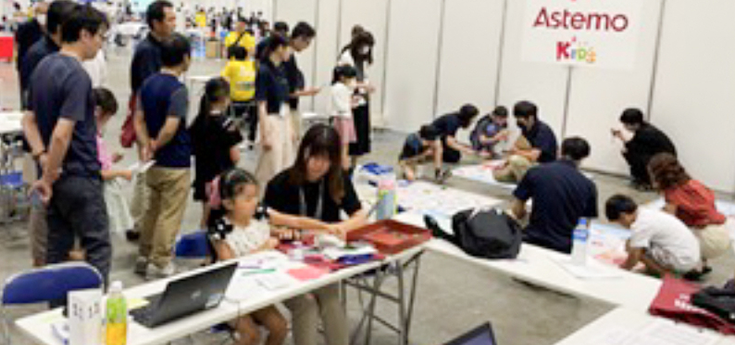
Exhibition at JSAE Kids Engineer 2024
In August 2024, Astemo held a hands-on workshop for children at “Kids Engineer 2024,” hosted by JSAE at Pacifico Yokohama.
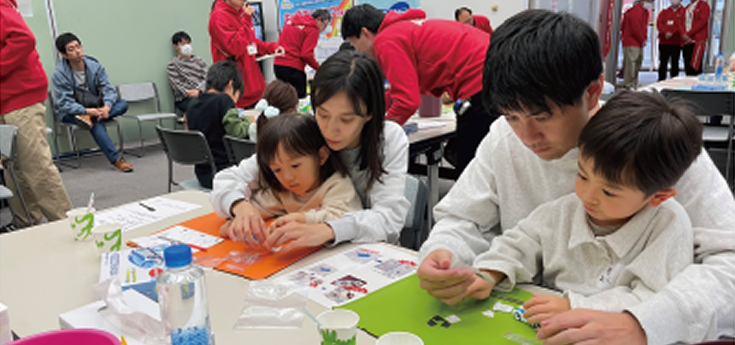
In November of the same year, we also exhibited at the “9th Kids Engineer in Tohoku 2024 Sendai,” hosted by the JSAE Tohoku Branch at the 3M Sendai City Science Museum. We shared the joy of making things with 40 children.
Case studies (global)
-
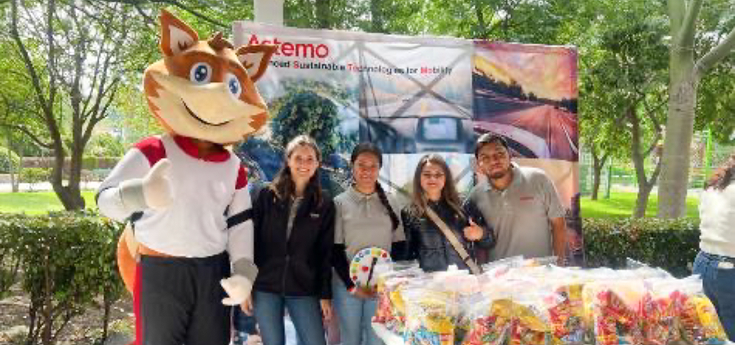
Initiatives in the Americas
In February 2025, five employees from the Queretaro Plant visited the facility of AMANC, a support group for childhood cancer patients and their families, and volunteered to help run a bazaar as part of a fundraising campaign. Another group of volunteers also participated in an event held by AMANC to provide some fun and relaxation for children battling cancer.
-
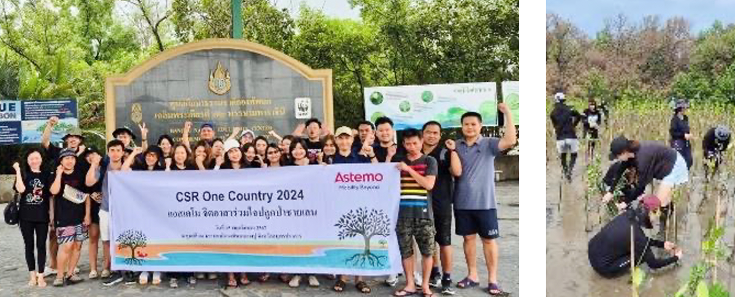
Initiatives in Asia
Approximately 30 employees from various sites across Thailand gathered to volunteer in mangrove planting activities in November 2024. They planted 600 mangrove seedlings at the Bangpu Nature Education Center, which is one of the few remaining natural mangrove forests in the inner Gulf of Thailand and is jointly managed by the Royal Thai Army and WWF Thailand.
-
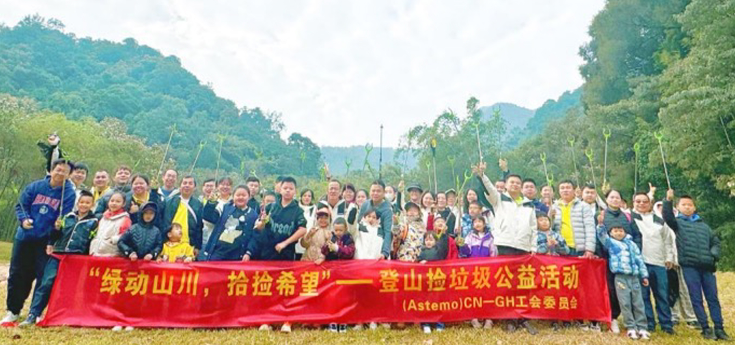
Initiatives in China
In December 2024, employees of Guangzhou Plant No.2 and their families participated in a charity event combining pleasant hiking with trash collection along mountain trails, aiming to “enjoy nature, join forces, clean the environment, and share a greener future.” Participants experienced the beauty of nature while contributing to local environmental conservation.
-
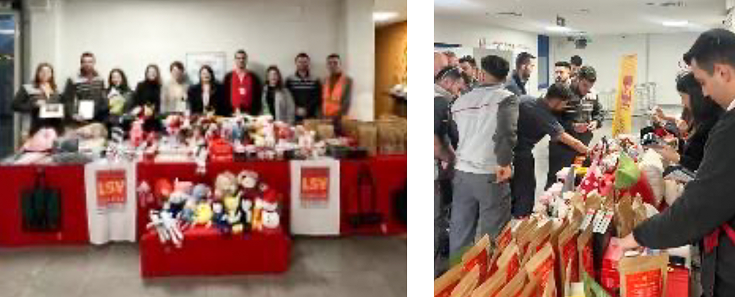
Initiatives in the EU
In January 2025, employees from the Bursa Plant attended a seminar hosted by LÖSEV, a nonprofit supporting children with leukemia and their families. At the seminar venue, handmade items made by the mothers of children undergoing treatment were exhibited and sold, and participants supported LÖSEV’s activities by purchasing the items.
Material issues relating to society Create a sustainable and resilient supply chain trusted by society
Vision for 2030
- Establish a system that minimizes supply chain risks as much as possible.
- Achieve a robust network that contributes to sustainable economic and social activities.
Action
Promoting sustainability with procurement partners
The Astemo Group positions sustainability as a key foundation of its procurement activities and aims to contribute to the realization of a sustainable society in collaboration with its procurement partners. We place great importance on fair and long-term partnerships with our procurement partners and are continuously working to build and maintain mutual understanding and relationships of trust.
Building on this commitment, we have established a comprehensive basic policy aimed at advancing ethical and responsible business activities throughout our global supply chain. Specifically, we have established the Astemo’s Expectations of Business Partners, Astemo Group Sustainable Procurement Guidelines, Astemo Group Green Procurement Guidelines, and Astemo Group’s Policy for Responsible Supply Chain of Minerals. We require all procurement partners to engage in comprehensive initiatives that uphold business ethics, respect human rights and work environments, promote environmental conservation, and protect information and IP.
In our transactions with procurement partners, we conduct comprehensive evaluations that include quality, delivery time, price of the materials they provide, reliability, technological capabilities, and sustainability considerations. These multifaceted evaluations allows us to build true partnerships and work together to create new value.
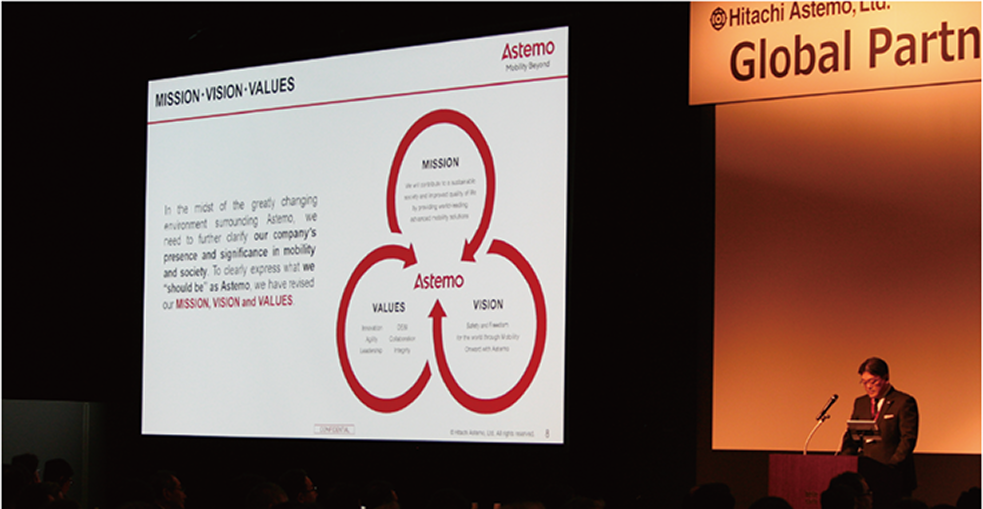
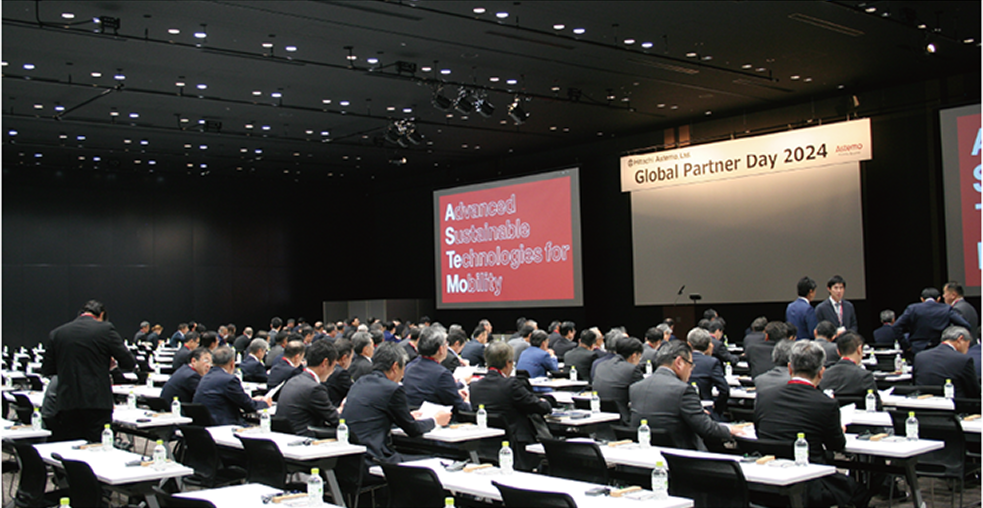
Engaging with procurement partners
To build long-term partnerships based on mutual understanding and relationships of trust, the Astemo Group actively creates opportunities for dialogue with its procurement partners.
For example, we hold an annual Global Partner Day that strengthens ties with partners through sharing of strategies by management, supplier recognition, and networking. The Global Partner Day held on November 14, 2024, was attended by approximately 80 people from Astemo and 174 people from our procurement partners. We shared our views with each other to keep our partnerships robust.
Quality assurance activities
The Astemo Group promotes concurrent engineering*, in which all relevant departments work together to improve product quality and strengthen our business foundation.
In delivering products and services, we strive to ensure quality and safety by meeting customer needs and specifications, complying with relevant laws and standards, and, where necessary, establishing our own internal standards. The Astemo Global Quality Manual also sets out the principles of quality management, and we are promoting quality assurance activities from the perspectives of organization and management, technology, and human capital in all processes—from product planning and development to design, manufacturing, testing, delivery, and maintenance services. Furthermore, based on the understanding that “prevention is the essence of quality assurance,” we are strengthening our efforts not only to prevent defect recurrence but also to prevent defects from occurring in the first place.
When a major defect occurs, we rigorously discuss and analyze not only technical causes but also process-related, organizational, and motivational causes, aiming to improve reliability and achieve the highest level of customer satisfaction.
-
*
Concurrent engineering: A method of shortening development time and reducing costs by simultaneously advancing multiple phases of a product’s development process and encouraging inter-departmental information sharing and collaboration.