Astemo Sustainability Stories
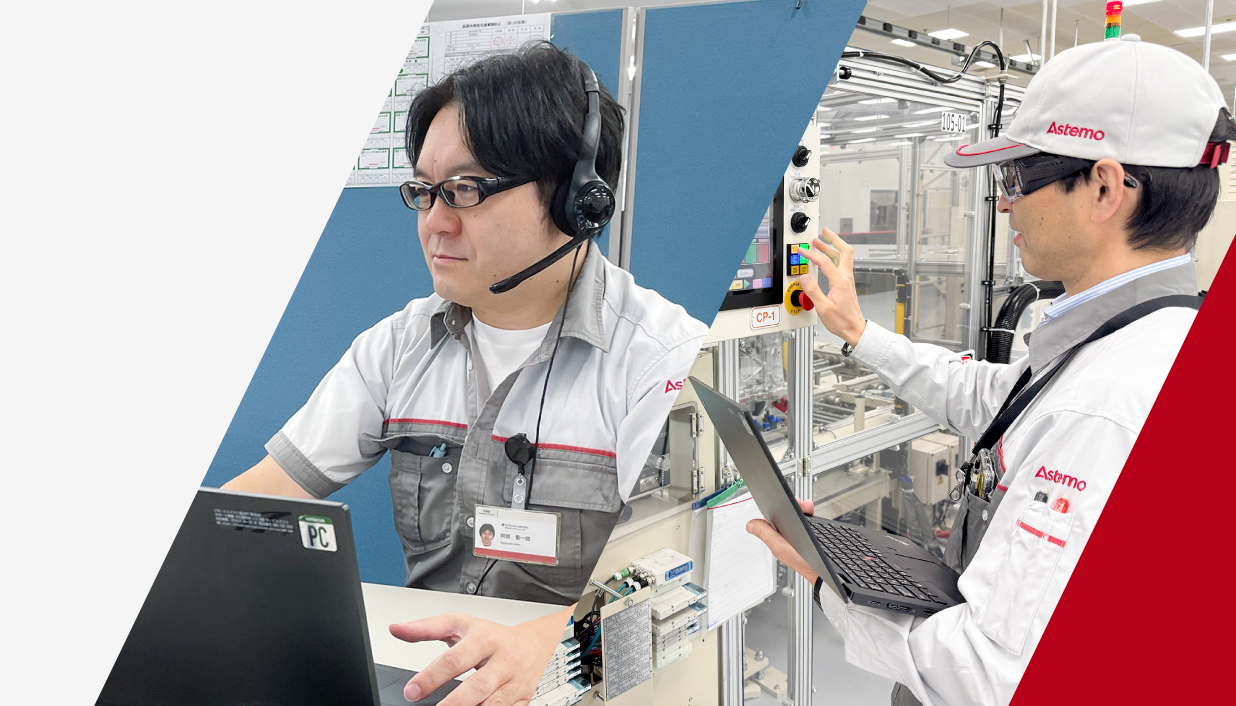
Creating eco-friendly mobility in an eco-friendly way
Development of motors and inverters for electric axles (e-Axles) [xEV Business Unit]
- xEV
- eAxle
- Smart factory
Electrification of vehicles driving the shift toward a carbon-neutral society
Vehicle electrification is a key factor in achieving a carbon-neutral society. In addition, it is essential to reduce environmental impact across the production processes for electrified vehicle products. By developing innovative EV products with advanced technologies and implementing initiatives to reduce environmental impact, the Astemo Group aims to contribute to society, enhance corporate value, and remain a company trusted by society.
Astemo’s solutions
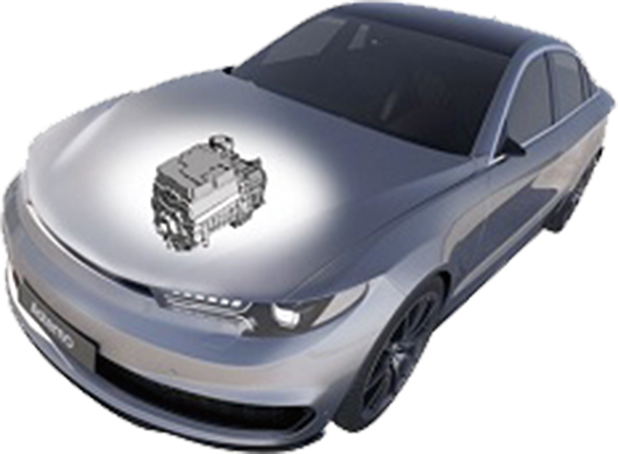
Developing e-Axles that achieve industry-leading efficiency with low vibration and noise
Astemo’s e-Axle serves as the heart of an electric vehicle, integrating the motor, inverter, and gearbox into a single unit. This integration enables a more compact and lightweight design compared with conventional products, significantly increasing flexibility in vehicle design. In addition, its high-efficiency, low-vibration design extends driving range while ensuring a quiet and comfortable cabin environment. Despite its compact size, the e-Axle delivers high power and smooth yet robust acceleration performance.
Impact
Financial impact Improving profitability in the xEV sector
By expanding our presence in the electrification market, establishing and promoting competitive standard models, and developing energy management systems, we aim to more than double the share of electrification-related product revenue by 2030 compared to FY2024.
Value provided to society Promoting eco-friendly mobility
In addition to improving the overall efficiency of products and systems, we reduce losses in the manufacturing process to lower resource and electricity consumption. By combining this with renewable energy, we aim to promote the widespread adoption of low-environmental-impact mobility.
Employee messages
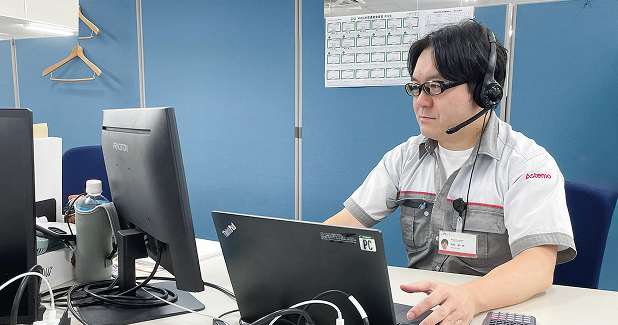
eAxle Products Group
Passion for development Aiming for mass production of e-Axles in collaboration with diverse team members
I am currently leading the development project for the compact, high-efficiency electric power unit “Gen1 e-Axle,” designed for electric vehicle platforms. This product is a subsystem combining the motor, inverter, and gearbox, featuring a compact, high-output, high-efficiency, and low-profile design. It enhances vehicle layout flexibility for customers while enabling long-range driving with lower energy consumption through improved efficiency.
This project is particularly challenging, as it involves developing a broad-scope subsystem with team members from different cultural backgrounds after a corporate integration. It also marks Astemo’s first mass production of this product and its first production at an overseas facility. Nevertheless, I am leveraging each team member’s strengths to drive development forward.
Looking toward the future Toward a clean mobility society through electrification
As electrification spreads across mobility, motors and inverters—areas in which we have long held expertise—remain essential components for all electric vehicles. We believe that by equipping even more electric vehicles with the Gen1 e-Axle, we can help extend driving range and deliver more attractive vehicle performance.
Building on the technologies and experience gained from the ongoing Gen1 e-Axle development, we will continue to develop world-class compact, high-efficiency electric power units, contributing to our customers, end users, and the realization of a sustainable society. I, too, will support the team by collaborating with relevant departments to maximize our collective results.
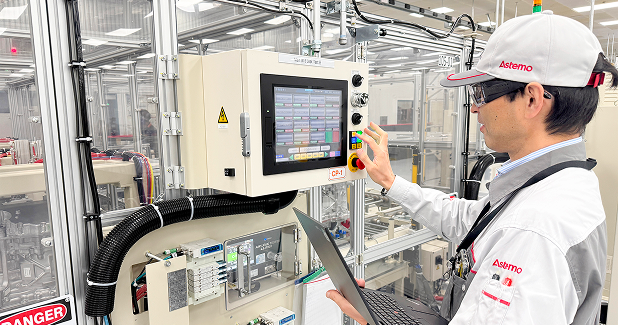
eAxle Products Division
Reducing environmental impact in the production process Cutting production process losses and CO2 emissions through IoT
I am responsible for designing and launching the assembly line process, as well as selecting and implementing the equipment for the e-Axle motor, inverter, and gearbox integration. In this role, I focus on utilizing IoT technologies to monitor equipment operation data and defect trends, helping to reduce losses. These efforts contribute to lowering environmental impact through more efficient equipment operation and reduced waste disposal costs. We are also reinforcing initiatives to reduce CO2 and hazardous substance emissions during production by electrifying actuators and parts transport systems and adopting oven-free curing processes. Furthermore, components deemed defective during production are centrally managed through a traceability system, properly treated, and reintroduced into the production line to conserve resources.
The e-Axle production process incorporates many new and unprecedented methods, and we often encounter challenges along the way. However, with a strong sense of purpose to contribute to a society where future generations can live prosperously, we continue to take on these challenges in close collaboration with team members in Japan and overseas.
Looking toward the future Creating human- and eco-friendly factories through smart factory initiatives
The electrification of mobility contributes not only to reducing CO2 emissions during product use but also to lowering environmental impact in the production process. Electric powertrains have a simple structure and fewer components, which reduces machining and assembly steps and helps limit energy consumption.
Going forward, we will further promote smart factory initiatives leveraging IoT, conducting simulations of environmental impact and energy use when modifying production lines or introducing new products, and implementing real-time management. In addition, by continuously monitoring equipment conditions and introducing preventive maintenance before failures occur, we aim to reduce equipment disposal and further enhance production sustainability.